Pocket Perspectives: How Small Openings Shape Everyday Views
Problem
In streets and yards we often focus on big gestures—a new facade, a tree canopy, a plaza—but the everyday act of looking is usually shaped by much smaller elements. A recessed window, a short wall, a gate, or a shallow porch can direct attention, compress a view, or reveal a scene in sequence. When these small features are neglected or designed without intention, the visual experience becomes flat: nothing compels the eye, and familiar places feel indistinct.
The challenge is to understand how modest openings perform the work of composing views so that they can be used intentionally. This is not about grand vistas but about making ordinary moments legible and pleasurable.
Principles
1. Scale and human register
Small openings work because they operate at a human scale. A low wall or a seat-height ledge frames a view at eye level for someone standing or sitting. When proportions match expected human dimensions, the framed view feels comfortable and achievable.
2. Contrast at the edge
Effective frames create contrast: a change in material, a shadowed recess against a bright street, or a vertical post against a horizontal plane. That contrast signals a boundary and focuses attention on what lies beyond.
3. Sightline compression
Narrowing a scene—through posts, plantings, or a gate—compresses depth, increasing apparent density and drawing focus. Compression is useful where the surrounding context is unruly or where a single tree, doorway, or bench should become the visual anchor.
4. Layered sequencing
Good small openings rarely reveal everything at once. A partially obscuring hedge, a low parapet, or a recessed window creates layers: foreground, middle ground, background. This sequencing rewards movement and change in perspective.
5. Light and reveal
Light animates framed views. Shadows can emphasize an opening, and a bright element beyond a darker frame becomes a point of attraction. Timing—morning light, evening glow—changes the quality of the framing.
Examples
Low Wall and Alley Tree
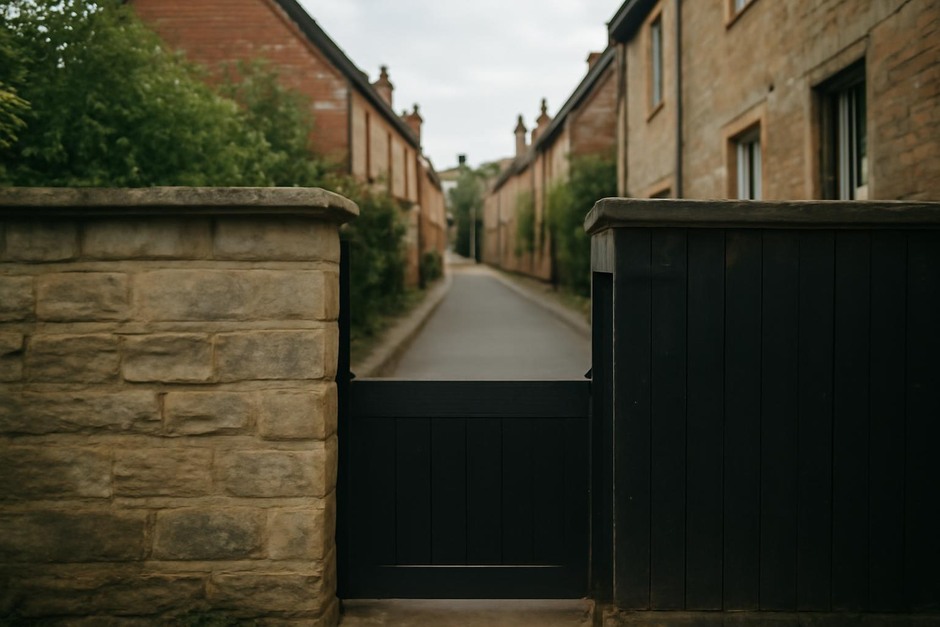
A narrow alley between houses offers little spectacle until a short masonry wall at the sidewalk sets up a low sightline. From a standing position the wall brings a small, distant street tree into direct relation with the pedestrian’s eye. The tree reads like an object on a plinth rather than a feature lost in urban noise. The wall’s texture and the tree’s foliage create contrast and a gentle reveal as one approaches.
Recessed Window as an Urban Mirror
A shallow window recess with a wide sill functions like a stage for the street. Reflections in the glass, a shadowed reveal, and a planted box on the sill combine to make the window both a lookout and a display. Passersby glance in; residents glance out. The recess reduces glare and frames a specific segment of the street—often a neighbor’s stoop or a corner shop sign—making everyday movement legible.
Gate and Aligned View
A simple iron gate, flanked by low planting beds and aligned with a focal point (a mailbox, a lamp post, or a tree), channels the line of sight. The gate’s bars give a rhythm to the view, and when opened the momentary widening of the frame amplifies the object beyond. Even closed, the gate promises a layered reveal that rewards entry.
Stoops and Step Seats
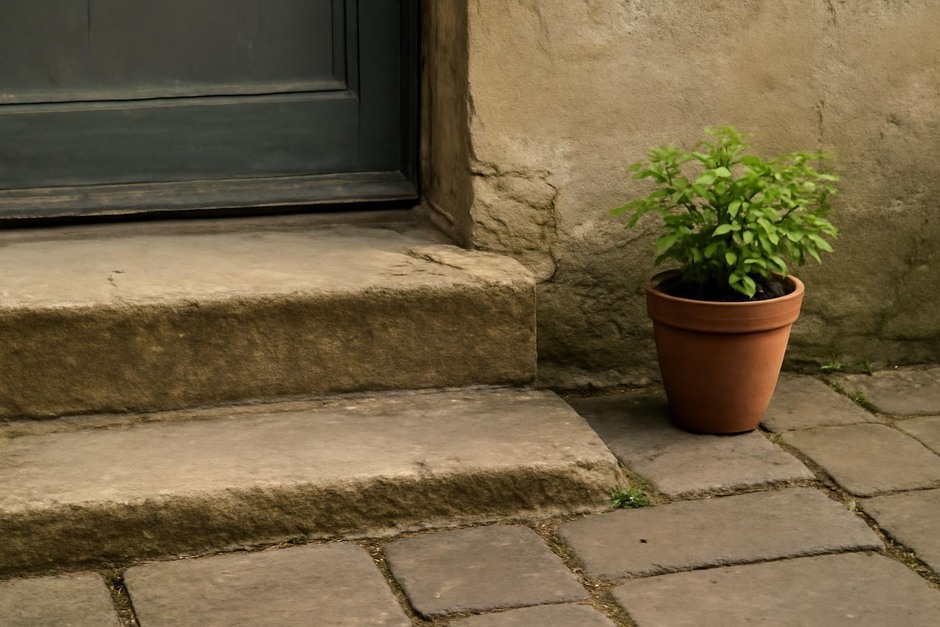
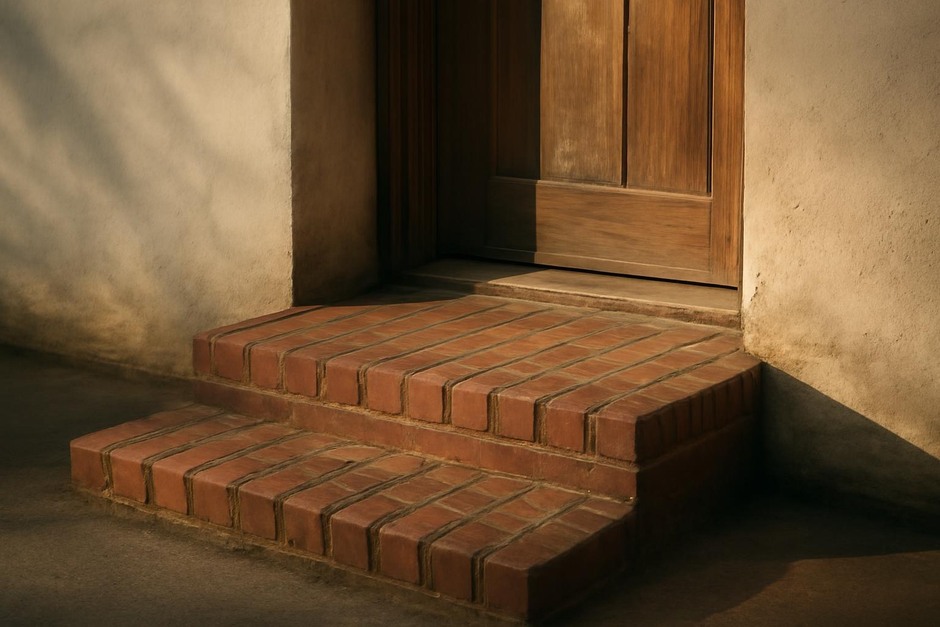
A modest stoop that sits slightly above the sidewalk creates a social frame: sitting there narrows peripheral distractions and centers the small scene of the street. Step seats—that is, a widened top step—invite pause and change the perception of passing life into something to be watched and learned from.
Practice Checklist
- Observe at human scale: stand, sit, and move through the space to see how openings change with posture.
- Test contrast: add or imagine a material, shadow, or planting to increase edge definition.
- Try sightline compression: temporarily place a chair, planters, or a portable screen to concentrate the view.
- Layer elements: use foreground plants, a low wall, and a focal object to create depth.
- Consider light: note morning and evening conditions and orient openings to take advantage of reveal moments.
- Design for sequence: avoid full disclosure—let the view unfold as someone approaches.
- Make it tactile: a sitting height, a touchable wall, or a gate handle invites participation and strengthens perception.
Small openings are quiet devices with outsized influence on how we experience places. They guide attention, pace movement, and create moments worth remembering. Practiced carefully, they let ordinary streets and yards feel composed without grand gestures.